The Three-Minute Tour
Click through it first. Then open the same book yourself.
Five real screens from a seeded sandbox tenant — the same 20-client, 43-account firm a signup hands you, free, in about thirty seconds. Press the numbers on each screen to see what it is showing you. No signup, no mock-ups, and nothing here asks for your calendar.
Skip the tour — open your firmStop 1 · The unified book
One book across four custodians
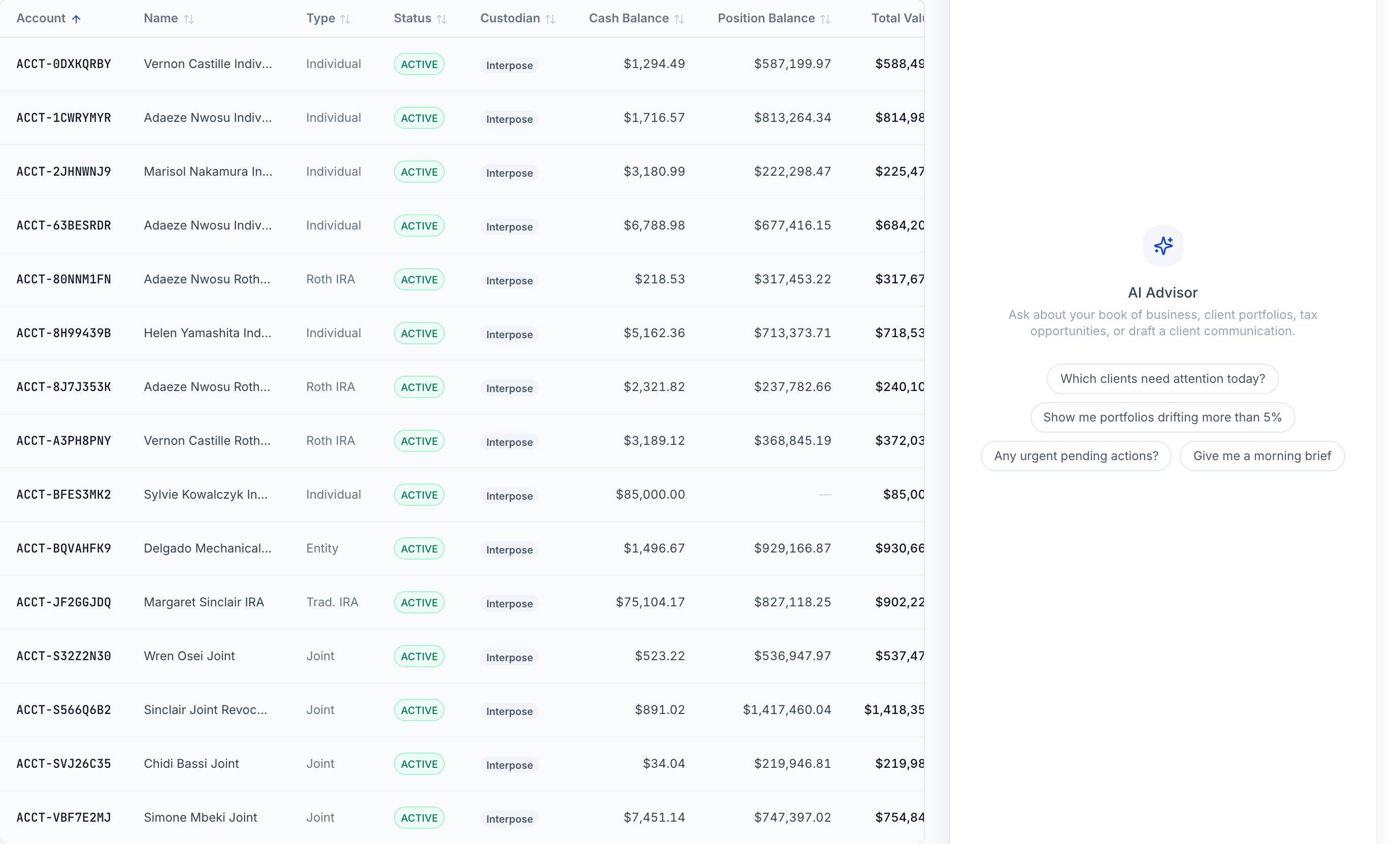
6 of your 43 seeded accounts live at Schwab, Fidelity and Pershing (or the custodians you pick at signup) in aggregated custody, sitting in the same portfolios as the natively-custodied ones. The same strategy, the same drift bands and the same rebalancer span all of them.
1 of 4 on this screen
Where each account is held
This capture shows the native book. In a trial, 6 more rows read Schwab, Fidelity or Pershing — the custodians you choose at signup — and their data moves at custodian-feed speed, not exchange speed.
Tip: the arrow keys work too.
Prefer to scroll? Every stop on one page
Stop 1 · The unified book
One book across four custodians
6 of your 43 seeded accounts live at Schwab, Fidelity and Pershing (or the custodians you pick at signup) in aggregated custody, sitting in the same portfolios as the natively-custodied ones. The same strategy, the same drift bands and the same rebalancer span all of them.
- Where each account is held. This capture shows the native book. In a trial, 6 more rows read Schwab, Fidelity or Pershing — the custodians you choose at signup — and their data moves at custodian-feed speed, not exchange speed.
- Real registrations. Individual, joint, traditional and Roth IRA, trust, custodial and entity accounts — the account type decides what the tax and RMD screens do with it.
- Cash and positions, apart. Cash and invested balances in separate columns, so an account waiting to be invested is visible at a glance rather than buried in a total.
- The AI panel, beside the book. Ask about the book in plain language. It answers from these accounts, and anything it proposes waits for a person to approve.
The accounts view, one row per account, custodian by custodianSandbox tenant · seeded book Stop 2 · The tax desk
Three years of lots, one harvest waiting for you
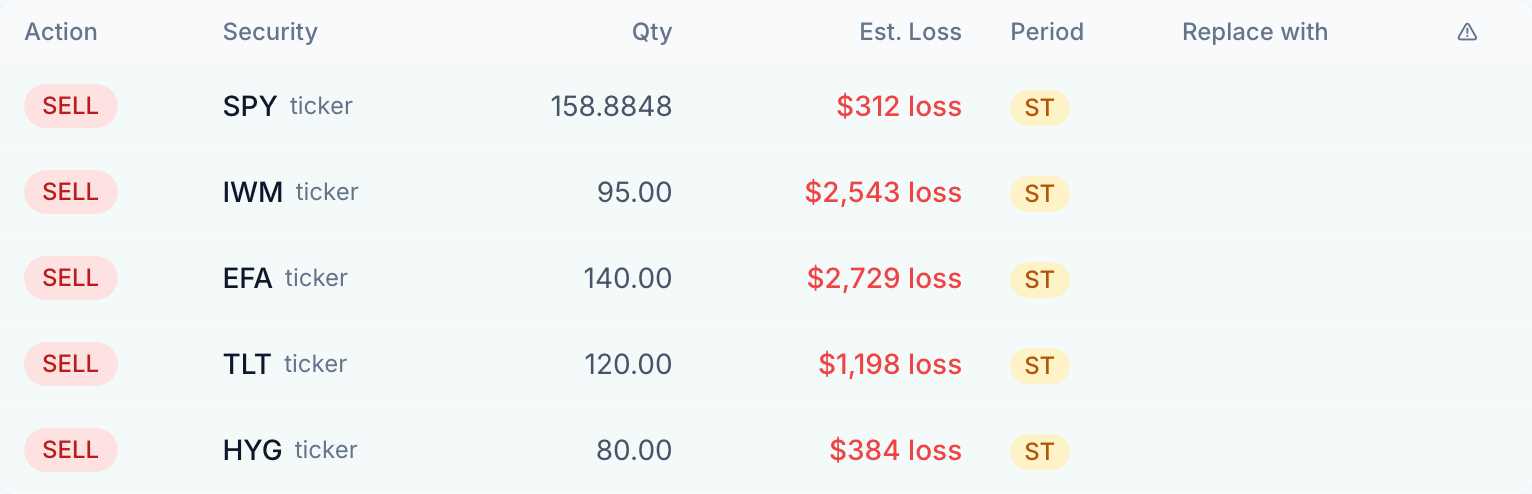
The seeded book carries three years of backdated history through the real fill path: genuine holding periods, realized gains in two tax years, a real wash sale, and harvestable losses. A harvest run sits waiting when you arrive — approving it, or picking it apart lot by lot, is the first ten minutes of the trial.
- Proposed, not placed. Each line is a sale the harvest would make. Nothing trades until you approve the run — and approval re-checks every lot at that moment's prices.
- The loss, lot by lot. Estimated from the actual tax lots the engine would sell, not from an average cost.
- Short- or long-term. The holding period of the lots being sold — the difference between offsetting gains taxed at ordinary rates and at capital-gains rates.
- Wash-sale checks. Flags a sale that a purchase in the last 30 days — in this account or another of the household's — would turn into a disallowed loss.
The harvest list over the seeded lots, ready for reviewSandbox tenant · seeded book Stop 3 · The models
Firm models with real analytics behind them
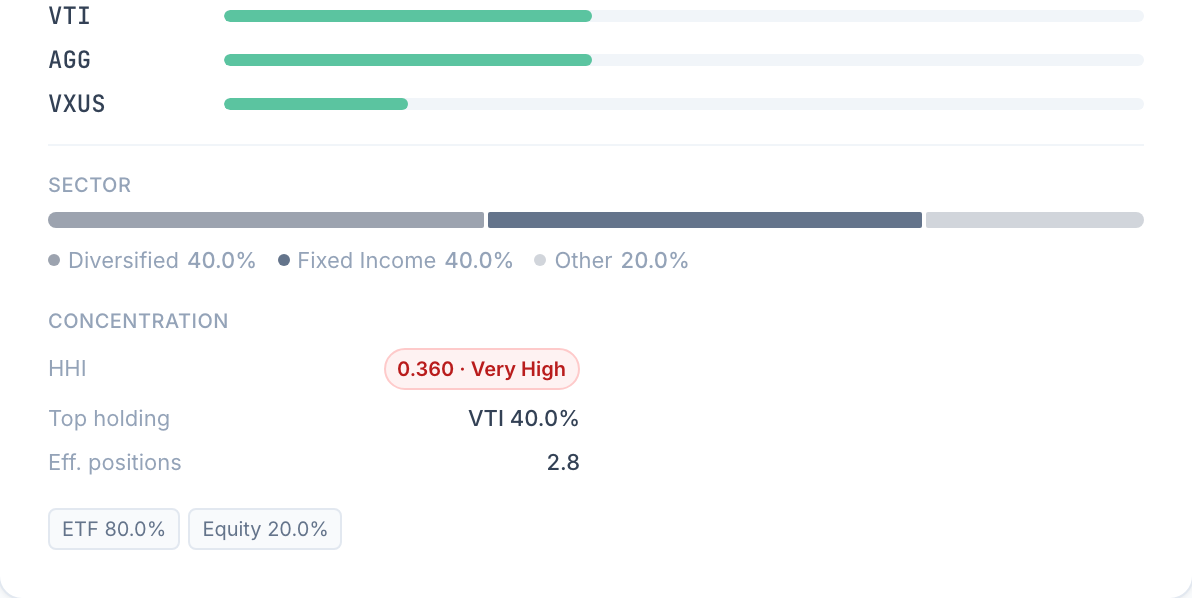
3 of the 4 seeded portfolios are backed by firm models — the fourth carries direct weights on purpose, because both shapes are first-class. Model analytics, drift measurement and the trading desk's by-model grouping all resolve against the same records.
- The model's lines. Target weights by holding. Edit them in a trial and the platform shows which accounts would leave their bands, and what the next rebalance would trade and realize, before you save.
- Sector exposure. Rolled up from the holdings, so a model that looks diversified by ticker can be checked for what it actually owns.
- Concentration, scored. A Herfindahl index and the effective number of positions — a three-fund model reads as concentrated, and says so.
Model analytics over a seeded firm modelSandbox tenant · seeded book Stop 4 · The practice
A practice in motion, not a database at rest
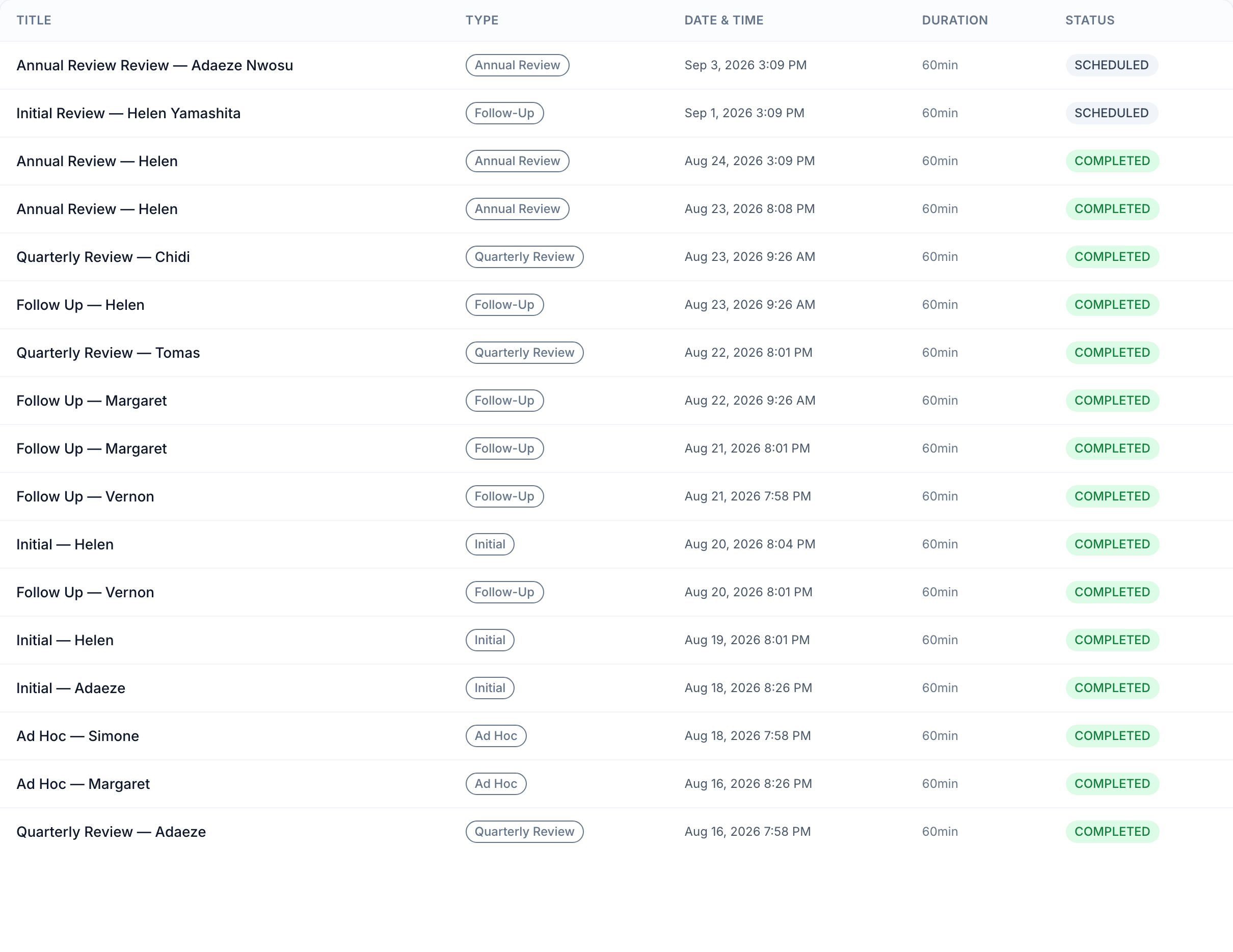
Every advisory client arrives with a meeting history — briefings, transcripts, action items — plus review cadence the dashboard actually reads. Today's meeting is deliberately left unbriefed, so the first AI briefing you see is one you generate.
- Meetings by type. Initial, quarterly and annual reviews, follow-ups — each type drives its own review cadence on the dashboard.
- What is coming up. Scheduled meetings feed the dashboard's next-fortnight view, and in a trial one of them is today's.
- What already happened. Completed meetings carry notes and action items, so a briefing has a history to draw on rather than a blank page.
The meeting history a seeded client carries on arrivalSandbox tenant · seeded book Stop 5 · Your clients' side
Sign in as your own clients
5 seeded people can sign in to the client portal — one advised, three self-directed, one managed — and the portal derives each experience from the shape of their accounts. Your advisor dashboard opens any of them in one click, so you evaluate both sides of the product from one signup.
- Harvesting, told to the client. Losses realized for them this year, in plain words — a tax figure, not a return.
- What is waiting. Open harvest opportunities, already filtered for wash sales across the household.
- Their strategy, by name. The firm's model the client is invested in — branded as the firm, not as Interpose.
- Kept on target. The rebalancer the advisor runs is the one that keeps this client's mix where the strategy says.
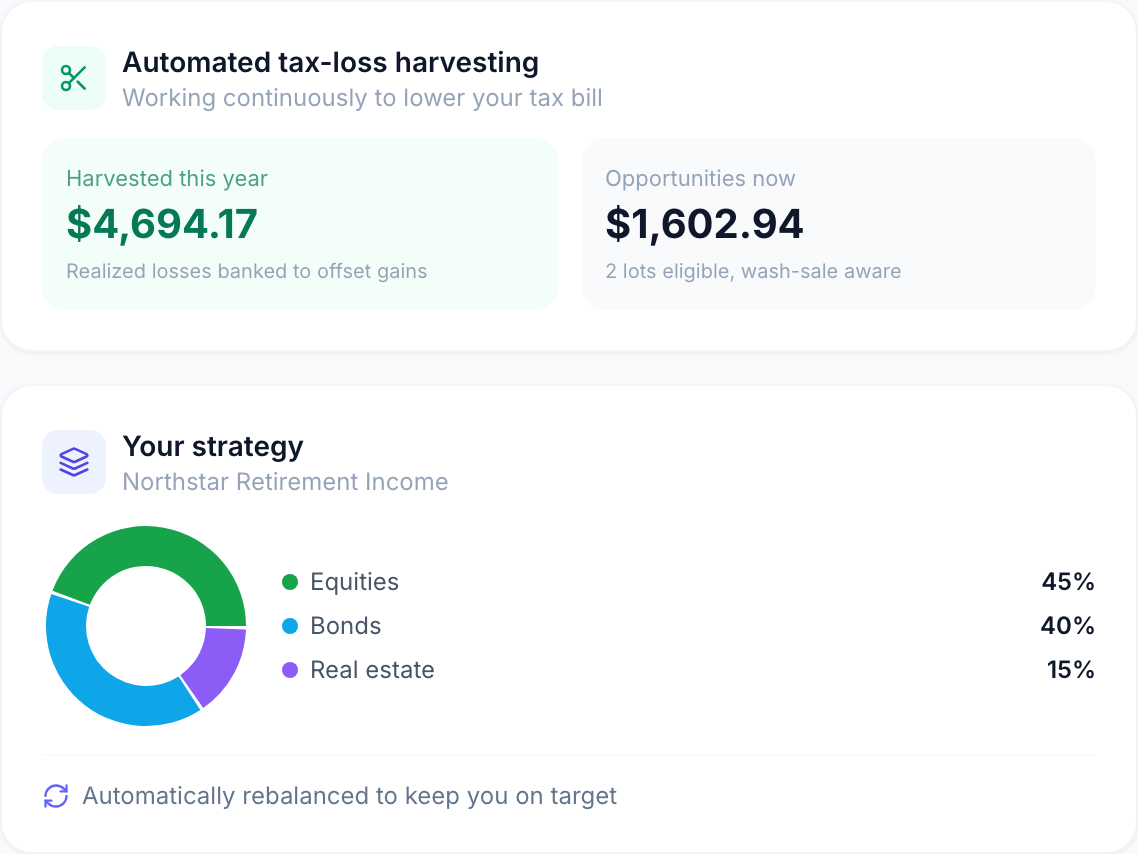
The home a managed client lands onSandbox tenant · seeded book
That was the tour. The product takes thirty seconds more.
Everything above exists in your own tenant the moment you sign up — the same book, plus the parts a page like this can't show: the rebalancer generating real orders, the billing preview pricing a quarter line by line, and API keys you mint yourself. Free for 30 days, no credit card, no scheduling link.